
Once you have a diagnosis of your condition, that will determine who you should see next.
Medical Doctor
 Medical doctors will perform invasive procedures such as trigger point needling or injections. They will also diagnose the cause of your pain, if possible, and can legally prescribe medications too. Physical therapists, doctors of acupuncture and chiropractors cannot prescribe medications unless they are also medical or osteopathic physicians.
A handful of medical doctors currently perform FSM therapy, but only a handful. Medical doctors generally will prescribe for one or more therapies and then will refer the patient to a physical therapist who would perform whatever prescribed therapies the doctor requested. Only recently have medical doctors begun to refer patients to either acupuncturists or chiropractors.
Doctor of Osteopathic or Osteopathy
 "The scope of practice for osteopaths includes diagnostic and therapeutic techniques (including musculoskeletal manipulations as well as prescriptions and other therapies) and preventive measures." (1)
Like M.D.s Osteopaths earn a four year under graduate degree and a four year medical school degree, plus they also endure internships and residencies the same as a medical doctor does. They specialize in any specialty area of medicine-such as pediatrics, family practice, psychiatry, surgery, obstetrics, etc. (2)
Osteopaths complete the same amount of education, internship and residency as a medical doctor; however, osteopathic physicians also receive an additional 300 - 500 hours in the study of hands-on manual medicine and the body's musculoskeletal system. (3)
"Osteopathic medicine is dedicated to treating and healing the patient as a whole, rather than focusing on one system or body part. An osteopathic physician will often use a treatment method called osteopathic manipulative treatment (also called OMT or manipulation) -- a hands-on approach to make sure that the body is moving freely." (4)
Some doctors of osteopathy will practice in the field of chronic pain relief and some have expertise in Trigger Point therapy and FSM therapy.
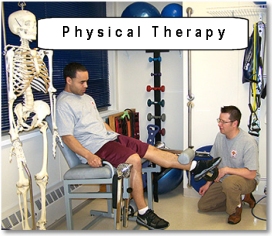
Physical Therapist
"Physical therapists provide services that help restore function, improve mobility, relieve pain, and prevent or limit permanent physical disabilities of patients suffering from injuries or disease. They restore, maintain, and promote overall fitness and health. Their patients include accident victims and individuals with disabling conditions such as low-back pain, arthritis, heart disease, fractures, head injuries, and cerebral palsy." (5)
"Treatment often includes exercise, especially for patients who have been immobilized or who lack flexibility, strength, or endurance. Physical therapists encourage patients to use their muscles to increase their flexibility and range of motion. More advanced exercises focus on improving strength, balance, coordination, and endurance. The goal is to improve how an individual functions at work and at home." (6)

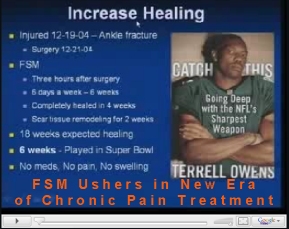
Physical therapists may also employ many sorts of electrical stimulation including Frequency Specific Microcurrent (FSM), Electrical Muscle Stimulation or EMS, Alpha Stim microcurrent, Electro Therapeutic Point Stimulation (ETPS) which is a form of microcurrent therapy and other similar microcurrent therapies. (7)
Physical therapists also use hot packs or cold compresses including ice massage and ultrasound therapies to relieve pain and reduce swelling and inflammation. Traction or deep-tissue massage are commonly used to relieve pain and improve circulation and flexibility. (8)
Physical therapists specializing in the treatment of chronic pain as the primary focus of their practice will often implement trigger point and acupuncture point therapy as a frequent method of pain relief. A physical therapist who specializes in chronic pain would be one type of provider you will want to seek.
Pain specializing physical therapists will frequently work together with medical doctors because some health insurance companies require a medical doctor's prescription before they will compensate the physical therapists. The general rule is see your medical doctor first to be treated by the physical therapist; however, some insurance companies will allow PT visits without a doctor referral. It is usually wisest to contact your health insurance company first to learn its requirements. Then you may proceed to see either your medical doctor or a physical therapist depending upon your medical insurance policy requirements.
In any event, if you are private pay, then you do not need a medical doctor's prescription to be treated by a physical therapist. If you know that your health insurance allows physical therapy treatment without a medical doctor's okay, then physical therapists will be happy to treat you and get reimbursed by your health insurance. Most insurance policies do have a maximum number of physical therapy visits per year that the insurance company will reimburse, so if you exceed the maximum number you will be required to pay the physical therapist yourself.
Physical therapists, like medical doctors and osteopaths must complete a four year college degree program. In addition, physical therapists must also complete a regimen of post graduate education and training to obtain the physical therapy license. That regimen will soon include three years of post graduate study.
Chiropractor
 The chiropractic philosophy is based on the belief that bodily functions are connected and healing involves the entire body. Chiropractic philosophy hinges upon the thesis that the spine and the human nervous system is responsible for proper health. (10)
The spinal cord is responsible for both voluntary movements and involuntary functions such as breathing and one's heartbeat. Homeostasis is the state when all bodily systems are in balance. If the body falls out of balance, chiropractors will manipulate the body and especially the spinal chord to promote healing. (11)
 Chiropractors employ many of the therapies that the physical therapist does including heat and cold therapy, ultrasound, electrical muscle stimulation and relaxation, traction, massage, and exercise programs. Some chiropractors additionally may utilize acupuncture, trigger point therapy and FSM, or frequency specific microcurrent. (12)
Applicants for Chiropractic college "must have at least 90 semester hours of undergraduate study leading toward a bachelor’s degree." Curiously, an applicant for Chiropractic school is not currently required to have a bachelor's degree. However, "many applicants have a bachelor’s degree, which may eventually become the minimum entry requirement" according to the US Bureau of Labor Statistics. (13)
Chiropractic doctoral "programs require a minimum of 4,200 hours of combined classroom, laboratory, and clinical experience." Chiropractic programs stress anatomy, physiology, public health, microbiology, pathology, and biochemistry in the first two years of study. Manipulation and spinal adjustment along with physical and laboratory diagnosis, neurology, orthopedics, geriatrics, physiotherapy, and nutrition make up the final two years of education. (14)
Upon graduation students are granted a degree of Dotor of Chiropractic. After graduation some chiropractors continue to study pursuing a post doctoral education in either orthopedics, neurology, sports injuries, nutrition, rehabilitation, radiology, industrial consulting, family practice, pediatrics, and applied chiropractic sciences earning a diplomate in their given specialty. (15)
For whatever reason there has been a history of animosity between doctors of chiropractic and doctors of medicine through the years. However, that animosity has lessened somewhat in recent years and some medical doctors will now refer patients to chiropractors, and vice versa.
Acupuncturist
"Acupuncture is a component of traditional Chinese medicine that originated in China over 5,000 years ago. It is based on the belief that living beings have a vital energy, called "qi" (or chi), that circulates through twelve invisible energy lines known as meridians on the body. Each meridian is associated with a different organ system. An imbalance in the flow of qi throughout a meridian is how disease begins." (16)
 Dorland's Pocket Medical Dictionary states that acupuncture is "the Chinese practice of piercing specific areas of the body along peripheral nerves with fine needles to relieve pain, induce surgical anesthesia, and for therapeutic purposes." (17) Pain is reduced by restoring the balance of qi (or sometimes pronounced chi) in the body.
In 1997 the US Food and Drug Administration (FDA) reclassified acupuncture needles from "experimental" to "medical device." That same year the National Institutes of Health endorsed acupuncture for a variety of conditions. (18) Since that time numerous medical professionals from other fields, such as doctors of chiropractic, have taken up the practice of acupuncture and begun to offer it as a part of their practice.
Doctors of acupuncture will often enhance the needling procedure with moxibustion, which is the "heating of acupuncture needles with dried herb sticks to activate and warm the acupuncture point." The process is also known as "moxa." (19)
They may also perform electrostimulation, which "provides electrical stimulation to two to four acupuncture needles," by attaching electrodes to the needles and running minute electrical charges through the needles.This is primarily for pain relief. (20)
Another form of acupuncture is Chinese cupping in which glass or plastic cups are placed over acupuncture points on the skin. Through various means a vacuum is created under the cup drawing the skin upward into the cup thereby relieving qi and stagnation of the blood and relieving pain. (21)
- Trigger Point Needling to Alleviate Pain
- Managing Chronic Pain
- What Are Trigger Points?
- Referred Pain? What's That?
- FSM Ushers in New Era of Medical Treatment for Chronic Pain
Citations
(1) Medline Plus, http://www.nlm.nih.gov/medlineplus/ency/imagepages/9713.htm; Retrieved 11/12/2009.
(2) American Osteopathic Association, http://www.osteopathic.org/index.cfm?PageID=ado_whatis; Retrieved 11/12/2009.
(3, 4) Medline Plus, http://www.nlm.nih.gov/medlineplus/ency/article/002020.htm; Retrived 11/12/2009.
(5, 6, 7, 8) Bureau of Labor Statistics, Occupational Outlook Handbook, 2008-09 Edition. http://www.bls.gov/oco/ocos080.htm. Retrieved 11/13/2009.
(9, 10, 11, 12) What is Chirpractic?, by Ron Grassi, DC, MS, FACFEI and Mary Claire Walsh, staff writer, http://www.spineuniverse.com/displayarticle.php/article800.html. Retrieved 11/15/2009.
(13, 14, 15) Bureau of Labor Statistics, Occupational Outlook Handbook, 2008-09 Edition. http://www.bls.gov/oco/ocos071.htm#earnings. Retrieved 11/15/2009.
(16, 18, 19, 20, 21) What is Acupuncture? by Cathy Wong, ND, CNS. From About.com. January 31, 2005, http://altmedicine.about.com/cs/treatmentsad/a/acupuncture.htm. Retrieved 11/15/2009.
(17) Dorland's Pocket Medical Dictionary, 25th ed. W. B. Saunders Co., 1995. ISBN 0-7216-5738-9